)
)
)
Sip, hype, host: How pubs can win on drinks, PR and experience in 2026
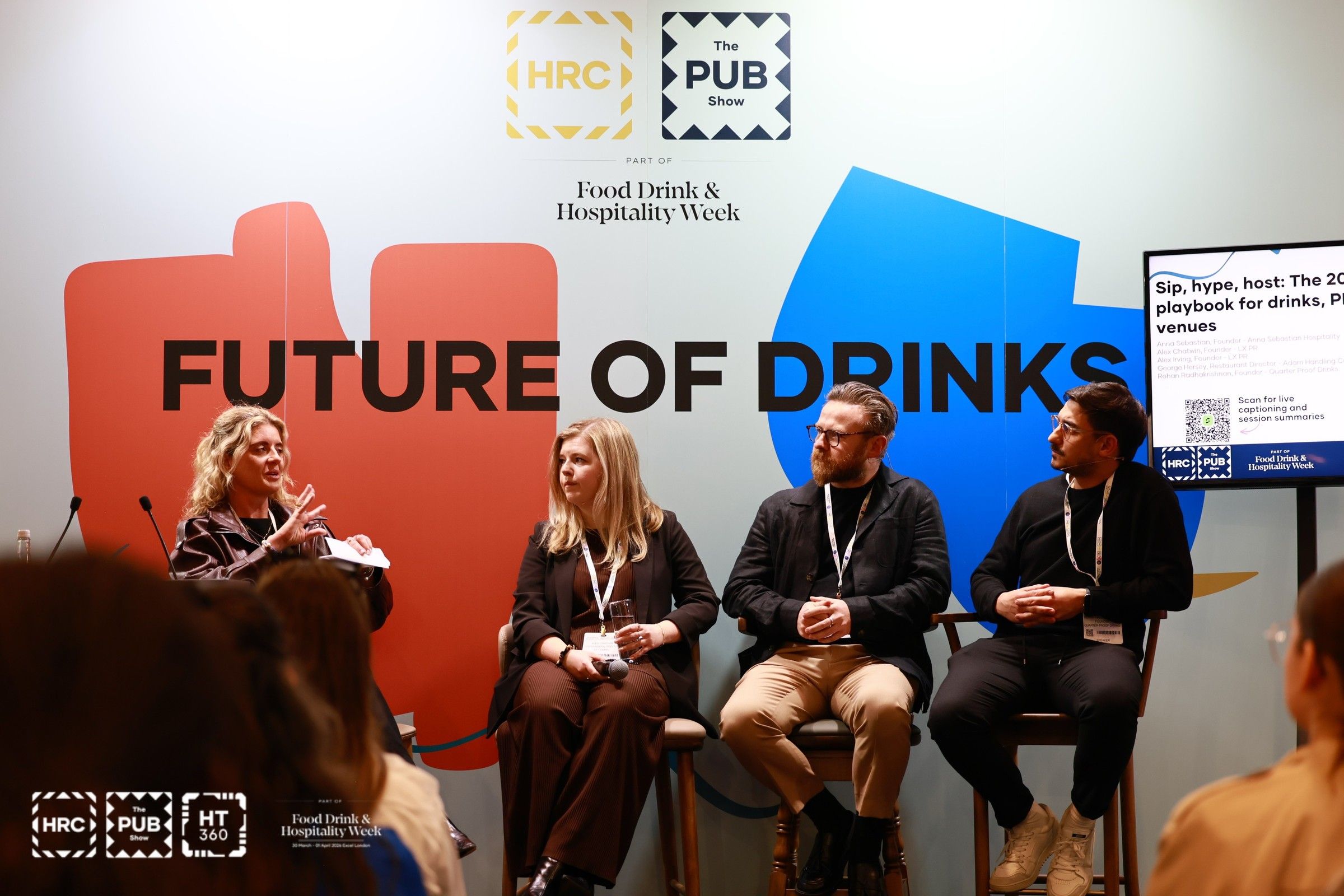
From evolving drinks trends to the growing importance of brand trust and guest experience, this Future of Drinks stage session at The Pub Show explored how pubs can refine their offer, sharpen their PR strategy and create venues that keep customers coming back in 2026.
At The Pub Show, the Future of Drinks stage brought together operators, brand builders and PR experts for “Sip, hype, host: The 2026 playbook for drinks, PR & venues”, a session exploring how pubs and bars can stay relevant as consumer expectations continue to evolve.
Moderated by Anna Sebastian, the panel featured Rohan Radhakrishnan (Quarter Proof Drinks), George Hersey (Adam Handling Collection), Alex Chatwin (LX Comms) and Alex Irving, who shared practical insights on everything from drinks development and venue design to marketing and guest engagement.
A central theme throughout the discussion was the growing importance of brand trust. Panellists agreed that long-term success is no longer built on standout individual menu items, but on delivering a consistently reliable experience. When guests trust a venue, they are far more likely to explore the full offer and return regularly, making consistency a critical driver of repeat business.
That consistency is under increasing scrutiny as consumers become more selective about how often they go out. With many guests choosing quality over frequency, the pressure is on operators to get every visit right. The panel highlighted that securing a third visit is often the biggest challenge, and even small lapses in quality or service can lead to lost customers.
Value also emerged as a key differentiator, but not in the traditional sense of price. Instead, value is now defined by the overall experience, from product quality and service to atmosphere and storytelling. With guests able to research pricing and reviews instantly, venues must clearly demonstrate why they are worth the spend.
On the drinks side, the rise of mid-strength spirits and moderation-focused occasions is reshaping menus. Rather than framing low- and no-alcohol options purely around health, operators are creating more sophisticated, experience-led alternatives. This shift is opening up new occasions, particularly around daytime drinking, where guests still want the ritual and enjoyment of cocktails without the full alcohol content.
The conversation also reflected a broader shift towards British products. With the UK now home to a growing number of distilleries, consumers increasingly expect to see local spirits and ingredients on menus. This is being driven by both a sense of national pride and practical considerations around supply chains and costs, reinforcing the importance of provenance in today’s offer.
Beyond the drinks themselves, the panel explored how venues are evolving into more immersive, multi-sensory spaces. Lighting, acoustics and music programming are playing a much bigger role in shaping guest experiences, with examples such as Japanese-inspired listening bars demonstrating how sound can become a defining feature of a venue. These elements are helping operators move beyond a purely food-and-drink proposition to create destinations.
At the same time, there is a growing desire for real-world connection. As digital fatigue increases, guests are seeking out venues that offer a sense of community and belonging. This creates opportunities for pubs to lean into their traditional strengths as social hubs, while finding new ways to bring people together through events, collaborations and shared experiences.
Marketing and PR strategies are evolving in parallel. The panel was clear that standalone PR campaigns are no longer enough to cut through. With consumers requiring more touchpoints before making decisions, successful promotion now relies on a more integrated approach, combining PR with partnerships, social content, and on-the-ground experiences. Crucially, this must be underpinned by a strong product, as no amount of exposure can compensate for a weak offer.
Technology and social platforms also featured in the discussion, with Pinterest highlighted as a valuable tool for forward-looking trend analysis. Unlike platforms that reflect current behaviour, Pinterest offers insight into what consumers are planning and aspiring to, from flavour trends to visual aesthetics, giving operators a useful edge in anticipating demand.
The session also touched on the role of creativity in driving engagement, from nostalgia-led collaborations to hyper-personalised events. These experiences can help venues stand out in a crowded market, particularly when they tap into cultural moments or build meaningful partnerships with brands.
Overall, “Sip, hype, host” painted a clear picture of a sector that is becoming more considered, more experience-led and more demanding of operators. For pubs, the opportunity lies in combining strong fundamentals – consistency, quality and service – with creativity, local relevance and a clear sense of identity.
As the discussion made clear, success in 2026 will depend on more than just what’s in the glass. It will be defined by how well venues bring together product, place and people to create experiences that guests actively choose to return to.
)
)
)
)
)
)
)
)
)
)
)
)
)
)
)
)
)
)
)
)
)
)
)