)
)
)
What do Britain’s pubs need to survive and thrive?
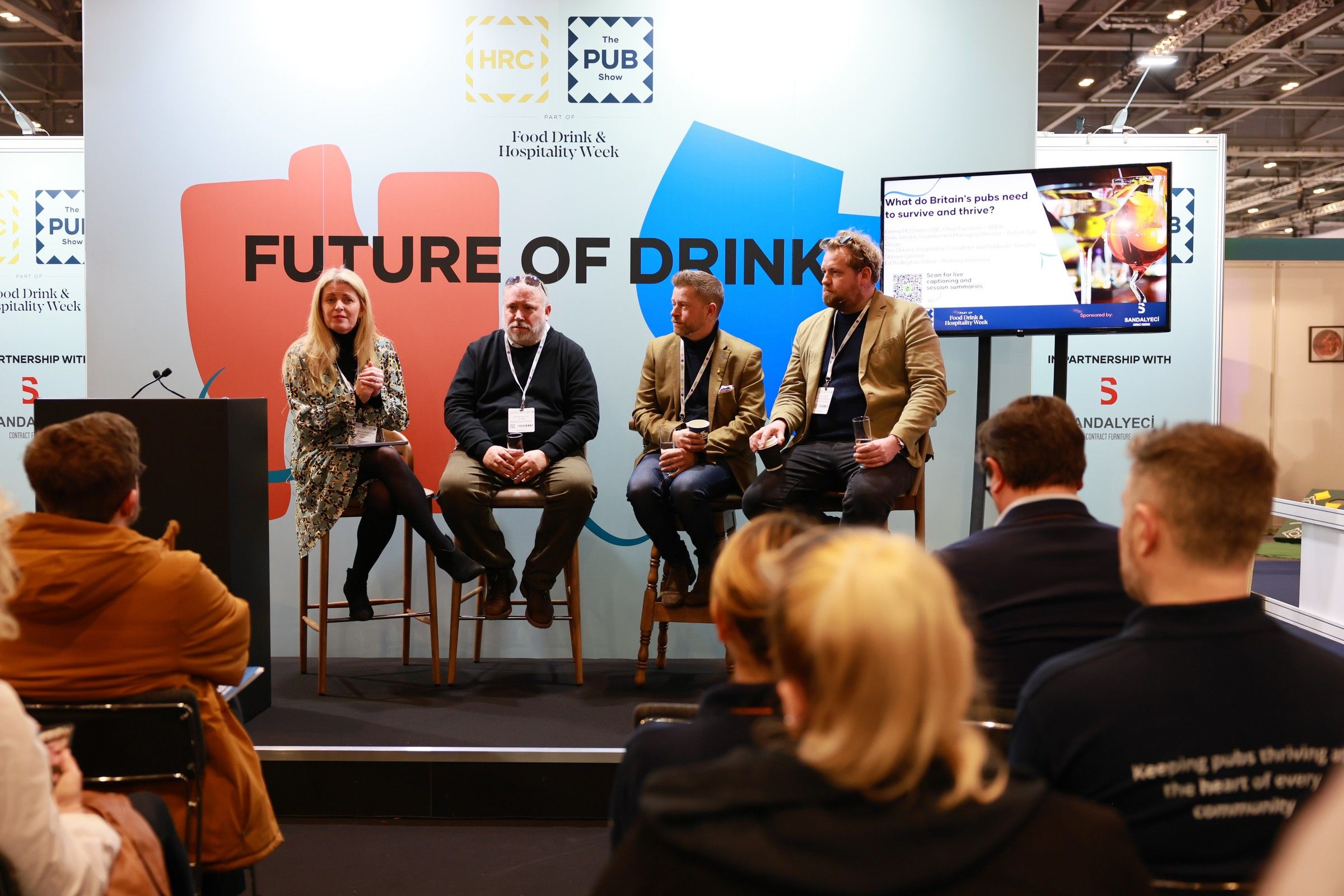
At The Pub Show, part of Food, Drink & Hospitality Week, this Future of Drinks stage session brought together Dom Jacobs (Ardent Pub Group), Emma McClarkin OBE (BBPA) and Tim Skinner (Timothy Skinner Limited) to explore the realities shaping the UK pub sector and what comes next.
The conversation made one thing clear: pubs remain fundamental to British life, but their long-term success depends on both structural change and operator agility.
Pubs as social infrastructure
In an increasingly digital world, pubs are taking on renewed cultural importance. The panel described them as an antidote to digital isolation, offering something people cannot replicate online: genuine human connection.
This shift is not just philosophical. It is influencing behaviour. Consumers are returning to pubs with intent, seeking quality time and meaningful experiences rather than casual, low-spend visits.
Trading up, not out
Despite ongoing economic pressure, the session highlighted a notable trend: customers are buying less, but better. Premiumisation continues to shape spending, with guests opting for higher-quality drinks and experiences.
For operators, this presents an opportunity. Independents in particular are well placed to capitalise, using their flexibility to curate distinctive offers that larger groups often struggle to match.
The independent advantage
Independent pubs were repeatedly positioned as having a competitive edge. Their ability to create value through atmosphere, service and local relevance allows them to differentiate beyond price.
That said, this advantage only goes so far in the face of systemic pressures.
Structural barriers holding the sector back
A significant portion of the discussion focused on the disconnect between the industry’s economic contribution and the challenges it faces.
Hospitality remains a major employer and taxpayer, yet operators continue to navigate:
- business rates that feel misaligned with value delivered
- costly and time-consuming licensing disputes
- inconsistent implementation of policy at local authority level
The panel shared examples of licensing cases where operators ultimately succeeded, but only after expensive legal battles that drained both business and public resources.
This disconnect between central government messaging and local authority execution was described as one of the most frustrating barriers to progress.
The case for collective action
There was a strong call for greater collaboration across the sector. Forming alliances and presenting a unified voice was seen as essential to influencing policy and driving meaningful change.
Operators are not just competing businesses; they are part of a broader ecosystem that needs to advocate for itself more effectively.
Cost pressures and operational reality
Alongside regulatory challenges, day-to-day trading remains volatile. Energy costs in particular were highlighted as unpredictable, forcing operators into near real-time decision-making.
Combined with wage pressures and lingering post-pandemic impacts, this creates an environment where long-term planning is increasingly difficult.
However, the panel noted that flexibility within employment can be a strength. Both employers and employees are seeking adaptable working arrangements, offering opportunities to build more resilient teams.
A sector that still matters
Ultimately, the session reinforced the enduring relevance of pubs. They are not just businesses, but community anchors and cultural spaces.
The path to survival and growth lies in two parallel tracks: operators continuing to innovate and refine their offer, and a wider reset in how the sector is supported at policy level.
With the right balance of collaboration, reform and creativity, Britain’s pubs are not just capable of surviving, but of thriving in a changing landscape.
)
)
)
)
)
)
)
)
)
)
)
)
)
)
)
)
)
)
)
)
)
)
)