)
)
)
0.0% vs 0.5% beer: Does the difference matter?
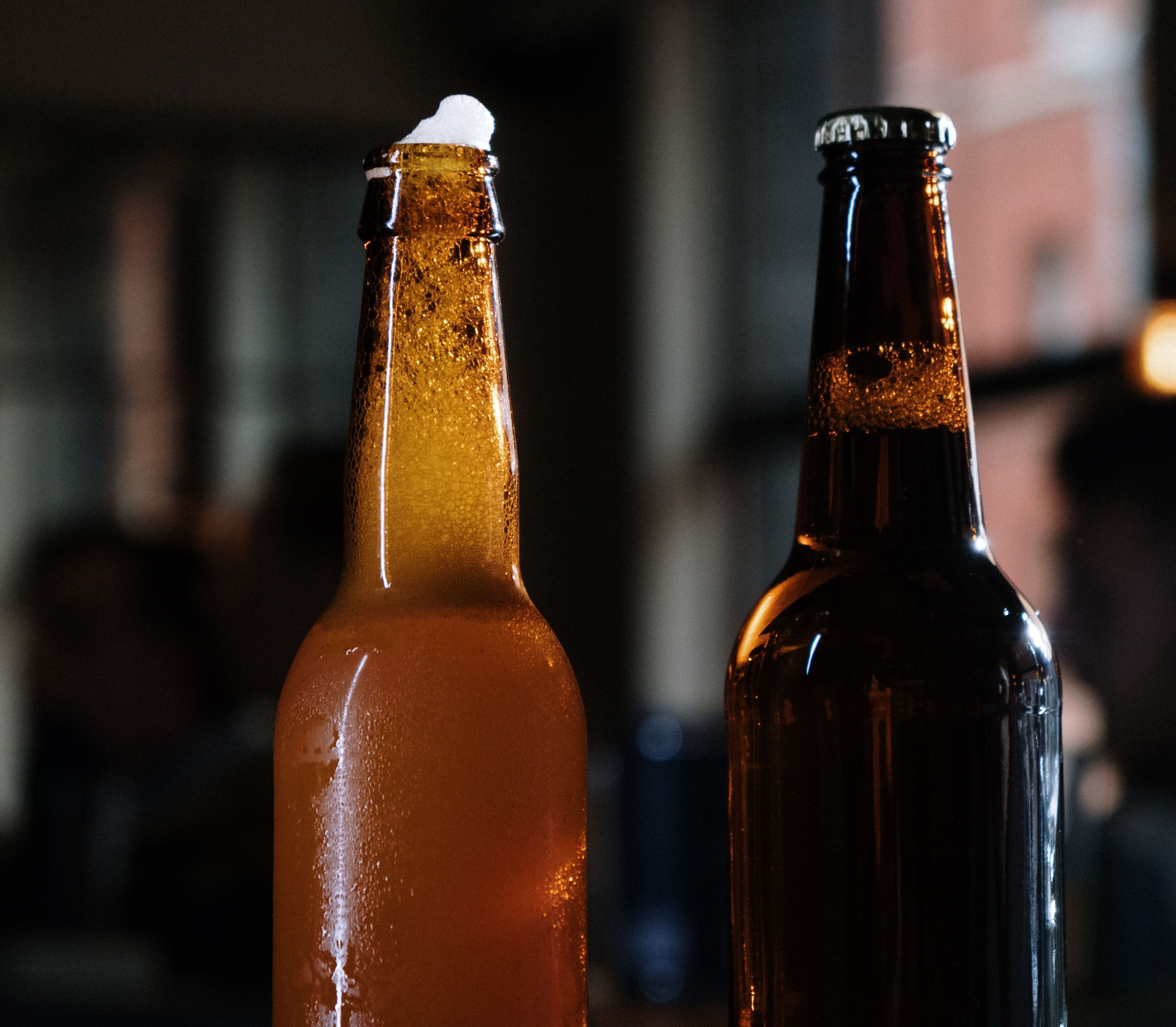
The growth of alcohol-free beer has given pub operators more choice than ever. Alongside familiar 0.0% versions of major beer brands, a growing number of independent breweries are producing beers containing up to 0.5% alcohol by volume (ABV).
Both can provide an alternative for customers moderating their alcohol intake, but the distinction between them is not always well understood. Does 0.0% offer greater clarity and inclusivity, or does allowing a small amount of alcohol give brewers more freedom to deliver an authentic-tasting beer?
What do 0.0% and 0.5% mean?
The difference is the amount of alcohol remaining in the finished drink. A beer labelled 0.0% contains either no alcohol or only a trace amount, while a beer at 0.5% ABV contains a small quantity.
A 500ml serving of 0.5% beer contains 0.25 units of alcohol, compared with approximately 2.2 units in a typical 500ml beer at 4.4% ABV, according to Drinkaware.
UK terminology adds a layer of complexity. Current government guidance for England recommends that “alcohol-free” should describe drinks containing no more than 0.05% ABV, while “de-alcoholised” can be used for products containing up to 0.5%. However, these descriptors are voluntary, meaning operators may encounter products marketed as alcohol-free that contain as much as 0.5% ABV.
The Government has committed to consult on raising the alcohol-free threshold from 0.05% to 0.5%, bringing it into line with several international markets. As of June 2026, officials were still reviewing evidence and considering the next steps, according to a parliamentary response from the Department of Health and Social Care.
The case for 0.0%
The clearest advantage of 0.0% beer is its simplicity. Customers can immediately understand that the product has been designed to contain effectively no alcohol, without needing to interpret unfamiliar terminology.
This can make 0.0% a reassuring option for designated drivers and people who have chosen to avoid alcohol. It may also appeal to customers who are uncomfortable ordering a drink containing any measurable amount of alcohol, however small.
For pubs, well-known 0.0% brands can be easy for customers to recognise and order. Prominent branding may help remove some of the uncertainty that has traditionally surrounded alcohol-free drinks and make them feel like an established part of the beer range.
The potential drawback is that reducing alcohol to very low levels can present technical challenges. Alcohol contributes to a beer’s body, aroma and overall flavour, and removing it after fermentation can also remove some of the characteristics brewers want to retain. Techniques such as vacuum distillation and reverse osmosis continue to improve, but they can require specialist equipment and additional processing.
That does not mean a 0.0% beer will necessarily be less enjoyable. The quality of products in this category has advanced significantly and ultimately depends on the recipe, brewing method and skill of the producer.
The case for 0.5%
Allowing a beer to retain up to 0.5% ABV can give brewers greater flexibility. Some producers use specialist yeasts or carefully controlled fermentation to limit the creation of alcohol, while others brew a conventional beer before removing most of it.
Leaving a very small amount of alcohol can help retain body, aroma and flavour. This may be particularly valuable in styles where complexity is central to the experience, including IPAs, pale ales, wheat beers and stouts.
The 0.5% category is also home to a broad range of specialist and independent producers. Stocking one can therefore help a pub offer something distinctive beyond alcohol-free versions of mainstream brands.
Its main disadvantage is the potential for customer confusion. Some people interpret “alcohol-free” as meaning absolutely no alcohol and may be surprised to discover that a product contains 0.5% ABV. Others may need to avoid alcohol completely for personal, medical or religious reasons. Drinkaware advises that products containing some alcohol may not be suitable for anyone who needs or wants to abstain entirely.
Clear menus and knowledgeable staff are therefore important. The exact ABV should be easy to see before the customer orders, especially when beer is served on draught and there is no bottle or can for them to inspect.
Is one better than the other?
There is no universal winner. A well-made 0.0% beer may outperform a less accomplished 0.5% product on flavour, while a 0.5% craft beer may offer the style and complexity a particular customer wants.
For operators, the more useful question is what role the beer will play within the overall drinks range. A recognisable 0.0% lager can provide clarity and broad appeal, while a 0.5% craft option can add variety and offer a different flavour profile. Where fridge or tap space allows, stocking both may serve the widest range of customers.
Whatever the choice, alcohol-free beer should receive the same attention as the rest of the drinks list. That means serving it at the right temperature, using appropriate glassware, ensuring staff have tasted it and making its strength clear.
The difference between 0.0% and 0.5% matters to some customers far more than others. Giving people accurate information, alongside a genuinely appealing choice, allows them to decide which option is right for them.
The Pub Show returns to Excel London on 5-7 April 2027 as part of Food, Drink & Hospitality Week, bringing together pub operators, suppliers and industry leaders to explore the trends shaping the sector.
)
)
)
)
)
)
)
)
)
)
)
)
)
)
)
)
)
)
)
)
)
)
)